


Text to Speech for Nursing Students
Text to speech for nursing students: what to listen to each semester, NCLEX rationales by ear, drug names and dosage math, and HIPAA rules for clinicals.
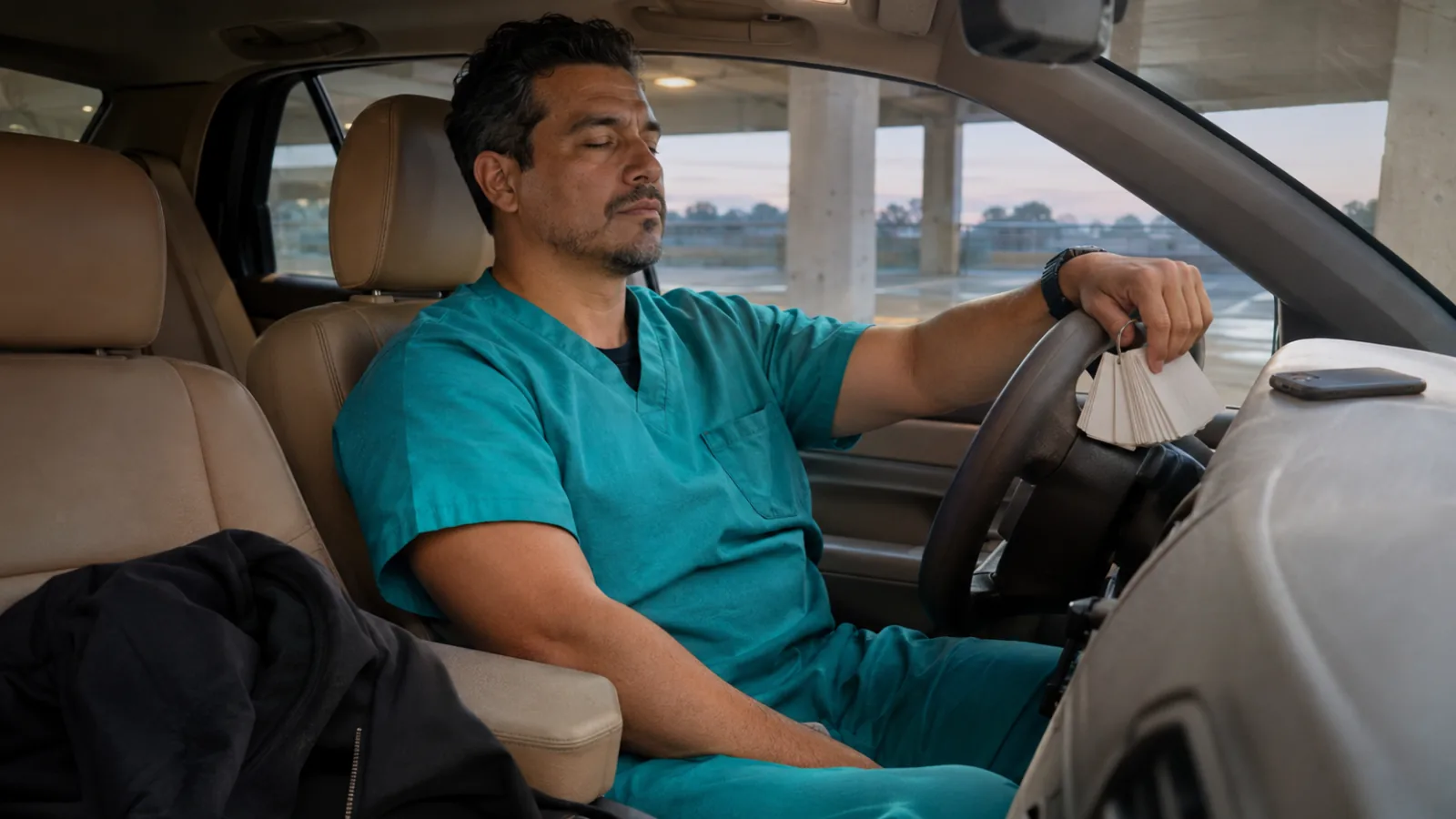
Text to speech for nursing students is best for the reading-heavy parts of nursing school: textbook chapters, lecture notes, NCLEX question rationales and care-concept review, heard on the commute or between shifts. Read drug names, dosage calculations, lab values and charts with your eyes, and never put patient information from clinicals into a personal app.
Listen to textbook chapters, lecture notes and NCLEX rationales; read drug names, doses, lab values and calculations on the page.
Hearing the rationales for questions you missed is one of the most efficient uses of commute time before the NCLEX.
Every phone and laptop has free read-aloud, so start there before paying for anything.
Voices can mispronounce drug names, so check new ones on screen and confirm pronunciation with an instructor.
During clinicals, keep anything with patient information out of apps your school or facility hasn't approved.
Text to speech for nursing students turns the long reading in nursing school, such as textbook chapters, lecture notes and NCLEX rationales, into audio for the commute, the gym or the drive to clinicals. It's most useful for prose that explains why. Drug names, dosage calculations, lab values and charts still need your eyes, and patient information from clinicals stays out of personal apps.
This guide covers what to listen to each semester, how to handle drug names, the free tools you already have, a weekly plan, and the privacy rules for clinicals. If you're already working as a nurse, our guide to text to speech for nurses and healthcare workers covers policies, CE and journals.
What can text to speech do for nursing students?
It reads any digital text aloud, which helps with the material you need to understand rather than memorize by sight.
| Material | Listen? | Tip |
|---|---|---|
| Textbook chapters (fundamentals, med-surg, OB, peds, psych) | Yes, read along | Follow the highlighted words; stop at tables |
| Lecture notes and slides with full sentences | Yes | Best on the way to class or before exams |
| NCLEX-style question rationales | Yes | Copy the rationales you got wrong into a document |
| Care plans and concept maps you wrote | Yes | Hearing them shows gaps in your reasoning |
| Patient education handouts | Yes | You'll explain these to patients; hear how they sound |
| Drug cards and pharmacology charts | Partly | Hear the mechanism and nursing considerations; read the name, dose and route |
| Lab values, dosage calculations, ECG strips | No | Work these on paper or screen |
Text to speech for nursing students, semester by semester
What you listen to should change as your program moves from theory to clinicals to licensure.
Fundamentals and early courses
Listen to each assigned chapter before lecture, following the text, then once more the week after. Use it for concepts like infection control, safety and the nursing process, where understanding the reasoning matters most.
Pharmacology
Listen to the explanations of drug classes, mechanisms, adverse effects and nursing considerations. Then make flashcards for names, doses and key labs and drill them by sight. Our guide to turning your notes into audio for revision shows how to build a review file.
Med-surg, OB, peds and psych
These courses mix long reading with clinicals. Listen to the chapter for the condition you'll see on your next clinical day on the way in. It's a fast refresher on pathophysiology and priority interventions.
NCLEX prep
Practice questions are the core of NCLEX prep. Use listening around them: after each block, paste the rationales for questions you missed into one document and listen to it on your next commute. Our guide to exam revision with text to speech has a full method.
Drug names, doses and dosage calculations: read them
A synthetic voice reads what's on the page, but it doesn't know how a new drug name should sound, and it handles units, decimals and abbreviations inconsistently. That matters more in nursing than almost anywhere else.
- Look-alike, sound-alike names. Pairs like hydralazine and hydroxyzine are on the FDA's name differentiation list because they're easy to confuse. Learn them by sight.
- Doses and units. A misheard or skipped decimal point changes a dose tenfold. Read every number.
- Dosage calculations. Work them on paper. Listening can't check your math.
- New terms. Watch the highlighted word the first time, slow to 0.75× or 1×, and confirm pronunciation with an instructor or pharmacist.
Free text to speech tools nursing students already have
Start with what's built into your phone and laptop. These are free and work with most notes, PDFs and web pages.
| Where | How to start it | Good for |
|---|---|---|
| iPhone and iPad | Turn on Speak Screen in Settings > Accessibility > Read & Speak, then swipe down from the top with two fingers | Notes and chapters on the go |
| Android | Turn on Settings > Accessibility > Select to Speak, then tap the shortcut | Notes and chapters on the go |
| Any app on a Mac | Turn on Speak selection in System Settings > Accessibility > Read & Speak, then select text and press Option-Esc | Lecture notes, web pages |
| Microsoft Word | Review > Read Aloud | Care plans, papers, your notes |
| Microsoft Edge | Open the page or PDF and press Ctrl+Shift+U | PDFs and online readings |
Many nursing textbooks are sold as protected eBooks inside a publisher's reader. Some of those readers have their own read-aloud; others block outside tools. Check what yours allows before you count on it. For PDFs that read oddly, see our guide to why some PDFs read strangely.
A weekly listening plan for nursing school
Nursing students often juggle classes, clinicals and paid work, so plan listening around fixed pockets of time.
- Sunday, 15 minutes: gather the week's chapters, slides and notes into one folder or reading app.
- Before each lecture: listen to the chapter or notes at 1×, following along when you can.
- Drive to clinicals: listen to the chapter for the conditions you're likely to see.
- After each question set: paste missed rationales into a review document.
- Commute home or workout: listen to that review document at 1.25× to 1.5×.
- Before bed, 5 minutes: close everything and write the three most important points from memory.
Recall matters as much as listening. Retrieval practice is one of only two study techniques rated high utility in a major 2013 review, so finish every listening session by testing yourself.
Text to speech as an accommodation
Nursing students with dyslexia, ADHD, low vision or other disabilities may be able to use text to speech for coursework and exams. Start with your school's disability services office early in the term.
For the NCLEX, accommodations are approved by your nursing regulatory body (your state or territory board of nursing), not by Pearson VUE. The NCLEX candidate bulletin says to request them in writing from your board, follow its documentation requirements, and apply as early as possible. Don't schedule your exam until you have written confirmation. Our page on reading with ADHD covers practical tools to discuss alongside professional support.
HIPAA and clinicals: keep patient information out
During clinicals, never paste notes, report sheets, care plans with identifiers, or photos of the chart into a reading app your school or facility hasn't approved. Under HIPAA, an outside service that handles protected health information generally needs a business associate agreement first, as HHS explains. A personal reading app won't have one.
Textbooks, lecture notes, public drug references and care plans you've fully de-identified for class are fine. When in doubt, ask your clinical instructor.
How nursing students can use Speechly
Speechly is a text-to-speech app for students on iPhone, iPad, Android, Mac and Windows. It reads PDFs, Word documents, EPUB books, web pages and photos of printed handouts aloud with 25+ natural AI voices and word-by-word highlighting.
- Download Speechly free. The free plan includes two text-to-speech files with premium voices; no card required.
- Open lecture slides as a PDF, import a Word file of notes, or photograph a printed handout or skills checklist.
- Press play and follow the highlighted words. Tap any sentence to start there.
- Set the speed from 0.5× to 2×.
- On a Mac, select text in any app and press ⌘E. On Windows, press Alt+R.
Speechly keeps reading with your phone locked, saves your place across devices, and estimates how long each document will take to listen to, which helps you match a chapter to your commute. Premium is $14.99/month or $139/year for unlimited listening on every device. It has no offline listening or browser extension.
The bottom line
Use text to speech for the reasoning in nursing school: chapters, notes, rationales and your own care plans. Read drug names, doses, labs and calculations by eye, finish each session with recall, and keep patient information out of personal apps. To hear your slides and notes with word highlighting on every device, download Speechly free and try it on your next drive to clinicals.
Frequently asked questions
Can I study for the NCLEX by listening?
Partly. Listening is a good way to review content and the rationales for questions you missed, but the NCLEX tests clinical judgment through questions, so most of your prep should still be practice questions at a screen.
Is it OK to listen to my nursing textbook instead of reading it?
For narrative sections on pathophysiology, nursing care and patient education, yes, ideally while following the text. Read tables, lab values, drug charts and diagrams with your eyes.
Can text to speech pronounce drug names correctly?
Common ones usually, but not reliably. Watch the highlighted word the first time you hear a new drug name, and confirm the pronunciation with an instructor, pharmacist or a trusted drug reference.
Can I get text to speech as an NCLEX accommodation?
NCLEX accommodations are approved by your state's or territory's nursing regulatory body, not by Pearson VUE. Request them in writing from your board before you register, and wait for written approval before you schedule.
Can I use text to speech during clinicals?
Only for non-patient material, such as drug references, policies or your own study notes. Charts, report sheets and anything with a patient identifier belong only in tools your school or facility has approved.
What speed should I use for nursing content?
Start new material at 1× while following the text. For review of content you've already learned, 1.25× to 1.75× works for many students. Slow down whenever drug names or new terms pile up.
Listen with Speechly
Natural AI voices on iPhone, iPad, Android, Mac and Windows, with word highlighting and your place saved on every device. Free to download.
Prices and features of other products were checked on November 18, 2026 and can change. Speechly is not affiliated with the other companies named here.
Text to Speech for Nurses and Healthcare Workers: Get Through Policies, CE and Journals by Ear
Text to speech for nurses and healthcare workers: free ways to hear policies, CE and journals after a shift, and what HIPAA says to keep out.

How to Use Text to Speech for Exam Revision
How to use text to speech for exam revision: turn notes into Q&A audio, test yourself as you listen, and follow a free 4-week plan on any device.

How to Turn Your Notes into Audio for Revision
How to turn your notes into audio for revision: rewrite them for the ear, then record yourself or use free text to speech on your phone or laptop.