

Project Gutenberg Explained
Project Gutenberg explained: where its 78,000+ free eBooks come from, whether it's legal and safe where you live, and how to read or listen to them.
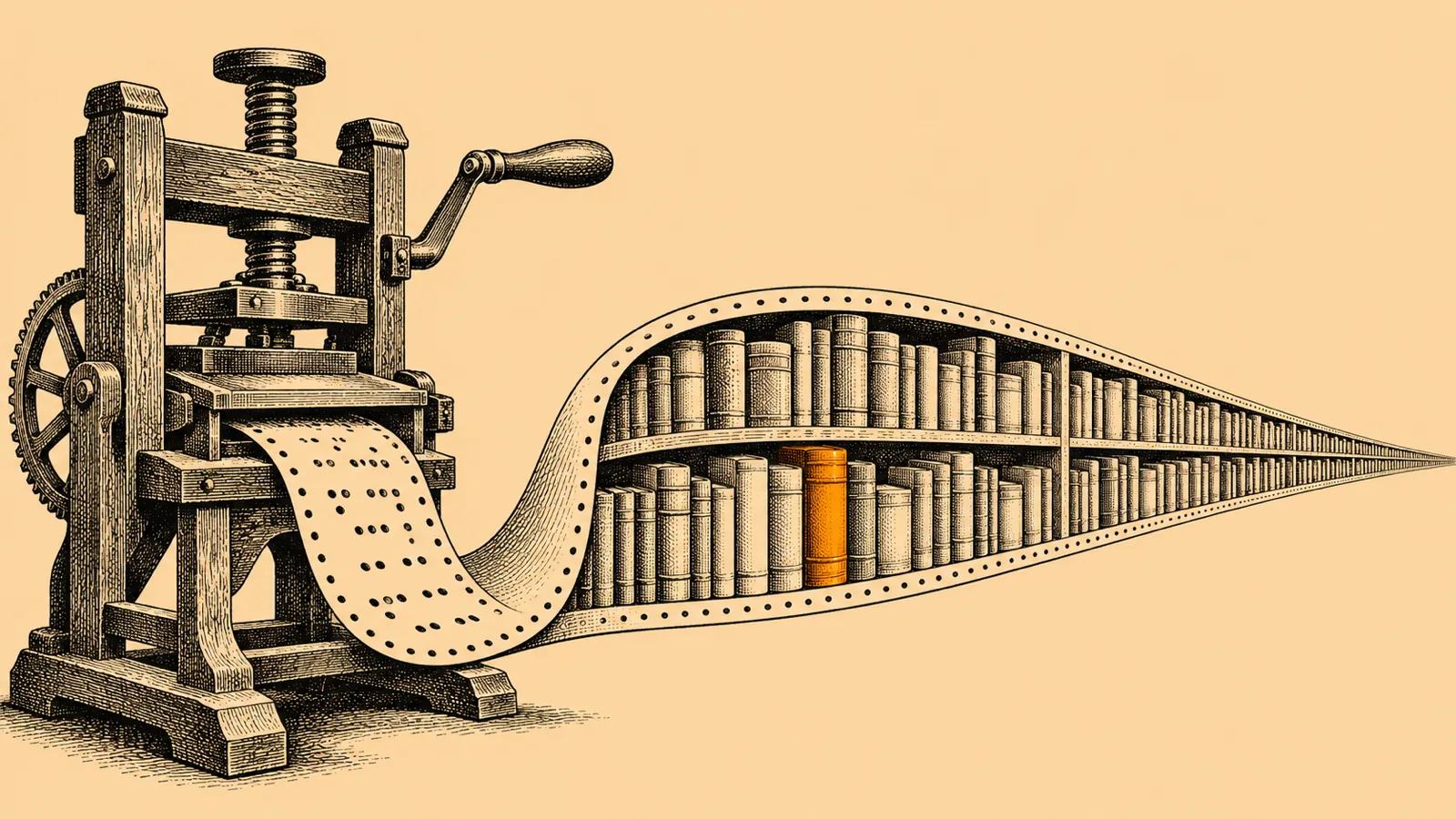
Project Gutenberg is a free, volunteer-run online library of more than 78,000 eBooks, mostly classics whose US copyright has expired. You can read or download any of them as EPUB, Kindle, HTML or plain text with no account and no fees. Founded in 1971, it is the oldest digital library.
Project Gutenberg is a nonprofit, volunteer-run library of free eBooks: 79,769 items in its official catalog as of November 8, 2026, including 78,518 texts.
It only publishes books that are public domain under US law, which in 2026 means anything published before 1931 plus later US books whose copyright was never renewed.
Downloading is legal in the US. Outside the US, Project Gutenberg itself tells you to check your own country's copyright law first.
Every book comes in several formats, including EPUB3 for e-readers and Send to Kindle, Kindle files, HTML for your browser and plain text.
You can copy, share, adapt and even sell the texts, but selling copies that carry the Project Gutenberg name means paying a 20% royalty on gross profits.
Project Gutenberg, explained in one line: it's a free online library of more than 78,000 eBooks, almost all of them classics whose US copyright has run out, made by volunteers and open to anyone with no account and no fees. Founded in 1971, it's the oldest digital library in the world.
Below: how it works, where the books come from, what's legal where you live, what you may do with the files and how to read or listen to them. Numbers come from Project Gutenberg's own catalog and license, checked on November 18, 2026.
Project Gutenberg explained: the quick facts
| What it is | A free digital library of public-domain books |
| Founded | 1971, by Michael S. Hart |
| Size | 79,769 items, including 78,518 texts and 1,114 audio items (catalog of November 8, 2026) |
| Languages | 68, with about 62,000 books in English |
| New books | 2,400 to 2,900 a year since 2021, about 50 a week |
| Cost | Free, no account, no ads, no app needed |
| Formats | EPUB3, older EPUB, Kindle, HTML and plain text |
| Run by | Volunteers, with the nonprofit Project Gutenberg Literary Archive Foundation |
| Website | gutenberg.org |
The counts come from the catalog file Project Gutenberg publishes for download, so they are more current than the "60,000" or "70,000" figures you'll still see on older pages.
How does Project Gutenberg work?
Project Gutenberg publishes books that no one owns a US copyright on, so it can give them away legally. Volunteers choose the books and turn printed pages into clean digital text, and the project checks each title's copyright status before it goes online.
Step 1: copyright clearance
Every book is cleared under US copyright law before it's added, and the clearance records are kept, according to Wikipedia's history of the project. In practice, that means books published before 1931 (before 1932 from January 1, 2027), plus later US books whose copyright was never renewed. Our guide to what public-domain books are explains those rules.
A few books are still under copyright and shared with the author's permission, such as some of Cory Doctorow's novels.
Step 2: scanning and proofreading
About two-thirds of the collection came through Distributed Proofreaders, a separate volunteer site founded in 2000 and officially affiliated with Project Gutenberg since 2002. It splits a scanned book into single pages, and each page goes through:
- Three proofreading rounds, each comparing the OCR text with the page image
- Two formatting rounds for italics, headings and footnotes
- A post-processor, who assembles the pages into one eBook and submits it
Distributed Proofreaders counts 51,524 titles preserved so far.
Step 3: one book, many formats
Each book gets a number and a page on the site. Pride and Prejudice, for example, is eBook #1342: first released on June 1, 1998, last updated on September 1, 2026, and credited to Distributed Proofreaders volunteers. Mistakes get fixed over time, so the same eBook number can be updated many times.
From one master file, Project Gutenberg generates every format:
| Format | Best for |
|---|---|
| EPUB3 (with images) | Most e-readers, phone apps and Amazon's Send to Kindle |
| Older EPUB (with or without images) | Older e-readers and small downloads |
| Kindle (new and older Kindles) | Kindle devices loaded with a USB cable |
| HTML | Reading in any browser, no download |
| Plain text (UTF-8) | Any device, text-to-speech apps, research |
Michael Hart insisted on a plain-text version of every book, the format he considered most likely to stay readable far into the future.
Who started Project Gutenberg, and when?
Michael Hart started it in 1971 with one typed document. The short version, based on Wikipedia and the project's own files:
- 1971: Hart, a student at the University of Illinois, gets time on a mainframe and types in the US Declaration of Independence. It's still eBook #1. He names the project after Johannes Gutenberg, the 15th-century inventor of movable-type printing in Europe.
- 1971 to 1989: Every text is typed in by hand. Scanners and OCR software only made book scanning practical around 1989.
- 2000: The Project Gutenberg Literary Archive Foundation is chartered in Mississippi as a 501(c)(3) nonprofit, and Charles Franks founds Distributed Proofreaders.
- 2009: The catalog starts generating EPUB and other formats automatically.
- 2011: Hart dies at 64, after 40 years producing and sharing eBooks.
- 2023: Researchers working with Project Gutenberg publish a paper on automatic audiobook creation and release more than five thousand open-license audiobooks narrated by AI voices.
What books are on Project Gutenberg?
Mostly classic Western literature, but the collection is wider than novels. The biggest categories in the catalog are novels (about 24,000), British literature, adventure, American literature and children's books. You'll also find poetry, plays, essays, history, biographies, cookbooks, old magazines and about 1,100 audio recordings.
English dominates, with about 4,200 books in French, 3,700 in Finnish and 2,400 in German among the 68 languages.
New public-domain books arrive every year. When 1930 books entered the US public domain on January 1, 2026, The Maltese Falcon went up that same day as eBook #77600. The Secret of the Old Clock, the first Nancy Drew mystery, followed on February 13, and Agatha Christie's The Murder at the Vicarage on March 16. Next up are the 1931 books entering the public domain in 2027.
Why isn't the book I want on Project Gutenberg?
Usually because it's still under US copyright. Three common reasons:
- It's too recent. Anything published from 1931 onward needs a closer look, and books from 1964 on are almost always still protected.
- It's free elsewhere but not in the US. George Orwell died in 1950, so Nineteen Eighty-Four is public domain in countries that count 70 years from the author's death. In the US, the 1949 novel stays protected until 2045.
- No volunteer has done it yet. Volunteers choose what to digitize, so some public-domain books are simply missing.
For the second case, independent sites such as Project Gutenberg Australia host books that are public domain under their own country's law. Use them only if that law covers you.
Is Project Gutenberg legal and safe?
Yes, in the US. Every book on the site is cleared as public domain under US law, so downloading, reading and sharing it is legal there.
Outside the US, it depends on your country. Each eBook opens with the same notice: it's free for "anyone anywhere in the United States and most other parts of the world," and elsewhere you have to check your local law first. Most countries count copyright from the author's death, so a book from the 1920s can still be protected where you live if its author died after the mid-1950s.
This isn't theoretical. After a lawsuit by the German publisher S. Fischer Verlag over books by Thomas Mann, Heinrich Mann and Alfred Döblin, Project Gutenberg blocked all of Germany from 2018 until a 2021 settlement. Now only those three authors' books are blocked there until their German copyright ends.
It's also safe, as long as you use the official site, gutenberg.org. It asks for no account, card or app, and the downloads are ordinary eBook, web and text files. Be wary of lookalike sites that ask you to sign up or pay for the same books.
What can you do with Project Gutenberg books?
Almost anything. The Project Gutenberg License lets you use the eBooks for nearly any purpose, including derivative works, reports, performances and research. You can:
- Read, print and give away copies
- Edit, abridge or translate the text
- Record it as an audiobook or podcast
- Use it in a class, a play or a research project
The one catch is the name. "Project Gutenberg" is a registered trademark. If you charge for copies that still carry the name and license, you owe a royalty of 20% of the gross profits to the foundation. Strip out the Project Gutenberg name and license, and the public-domain text itself has no restrictions in the US.
Project Gutenberg vs other free eBook sites
Project Gutenberg has one of the largest collections of proofread, free public-domain text, but it isn't the prettiest, and older files can show their age. Other projects fill the gaps:
| Site | What's different |
|---|---|
| Project Gutenberg | Huge collection of proofread text, many formats |
| Standard Ebooks | Fewer books, carefully edited and typeset, dedicated to the public domain |
| Internet Archive | Scans of the original printed pages, not just text |
| LibriVox | Free audiobooks read by volunteers |
| Wikisource | Transcribed texts in many languages, edited like a wiki |
For audio, our list of legal places to find free audiobooks covers LibriVox and more.
How to read or listen to Project Gutenberg books
You don't need any special app to start. Open the book's page on gutenberg.org, then:
- In a browser: choose the HTML version to read it online.
- On a Kindle: download the EPUB3 file and send it with Amazon's Send to Kindle, which accepts EPUB files.
- On a phone or tablet: download the EPUB3 file and open it in your eBook app.
- As audio: look for a human-read LibriVox recording, or play the text with a text-to-speech app.
Text to speech works especially well here because the books are clean, proofread text with no DRM. Our step-by-step guide shows how to listen to Project Gutenberg books on every device.
Listen to free classics with Speechly
Speechly is a text-to-speech reader with a built-in catalog of 75,000+ free public-domain books. Pick a classic there and press play, or open an EPUB or TXT file you downloaded from Project Gutenberg yourself.
- 25+ natural AI voices in eight languages, with word-by-word highlighting
- Speed from 0.5× to 2×, and your place is saved automatically
- Keeps reading with the screen off, so you can listen on a walk or a commute
- Every device: iPhone and iPad, Android, Mac and Windows, with one account
Speechly is free to download, and the free plan includes two text-to-speech files with premium voices, no card required. Premium costs $14.99/month or $139/year for unlimited listening on every device.
Frequently asked questions
Does Project Gutenberg cost anything?
No. Every book is free to read and download, with no subscription or account. The project is funded by tax-deductible donations to the Project Gutenberg Literary Archive Foundation, a 501(c)(3) nonprofit.
Who runs Project Gutenberg?
Volunteers produce the books, and the Project Gutenberg Literary Archive Foundation, chartered in Mississippi in 2000, handles the legal and financial side. The site is hosted by ibiblio at the University of North Carolina at Chapel Hill.
Does Project Gutenberg have audiobooks?
A few. Its catalog lists about 1,100 audio items next to 78,500 texts. For human-read recordings of the same classics, LibriVox has far more, and any Project Gutenberg text can be read aloud by a text-to-speech app.
Does Project Gutenberg add new books?
Yes, about 50 a week. It has no current bestsellers, because it only publishes books whose US copyright has ended, but it adds books the day they enter the public domain, such as The Maltese Falcon on January 1, 2026.
Can I use Project Gutenberg books for school or research?
Yes. The license explicitly allows derivative works, reports, performances and research. A Project Gutenberg text doesn't always say which printed edition it follows, so cite a printed edition when page numbers matter.
Is Project Gutenberg the same as Project Gutenberg Australia or Projekt Gutenberg-DE?
No. They are separate organizations with their own collections and rules. Some publish books that are public domain in their own country but still protected in the US, so check your local law before downloading.
Listen with Speechly
Natural AI voices on iPhone, iPad, Android, Mac and Windows, with word highlighting and your place saved on every device. Free to download.
Prices and features of other products were checked on November 18, 2026 and can change. Speechly is not affiliated with the other companies named here.
What Are Public-Domain Books?
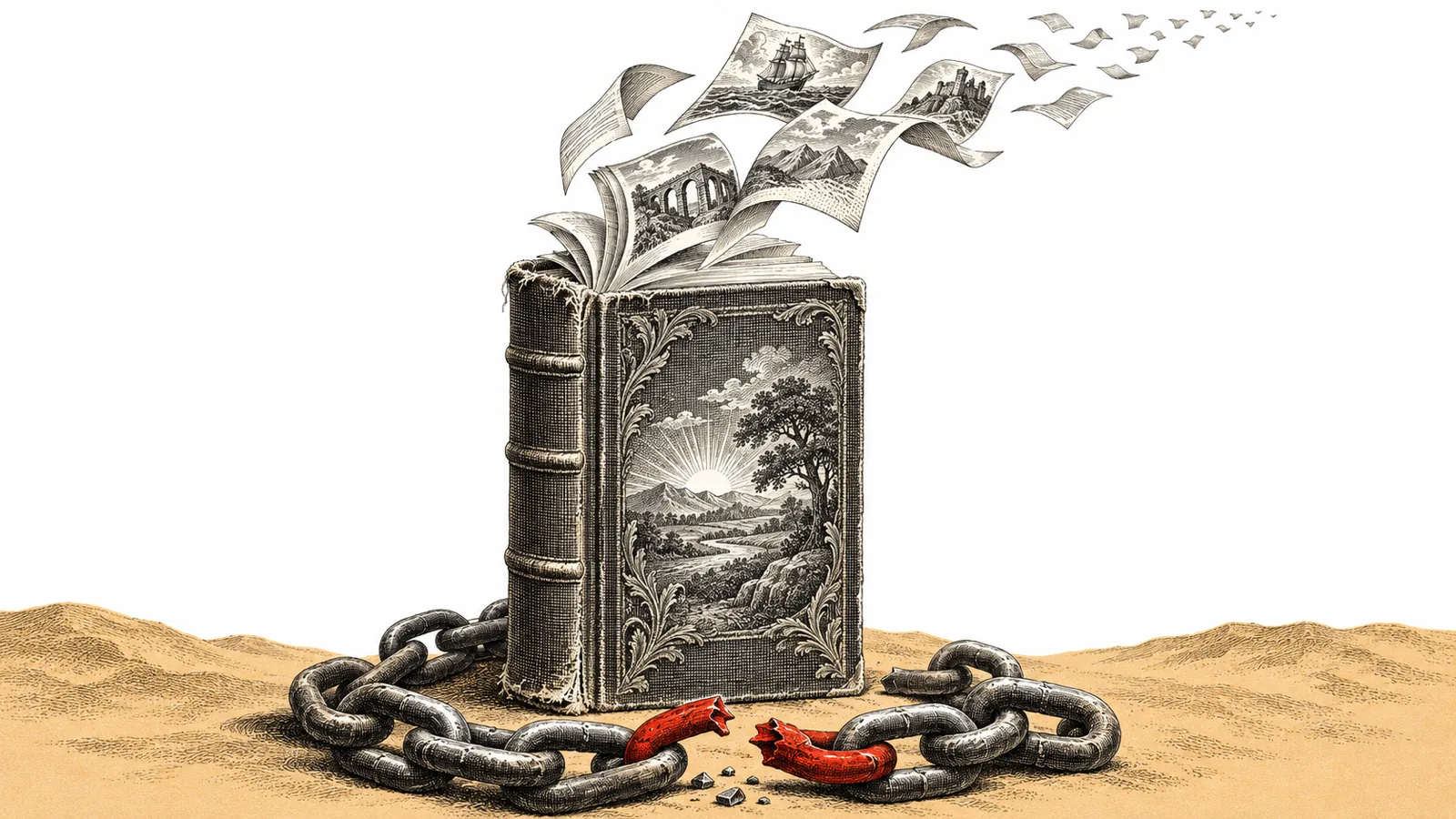
What are public domain books? Books with no copyright. See how the US rules work, famous examples, how to check any title and where to read them free.
How to Listen to Project Gutenberg Books
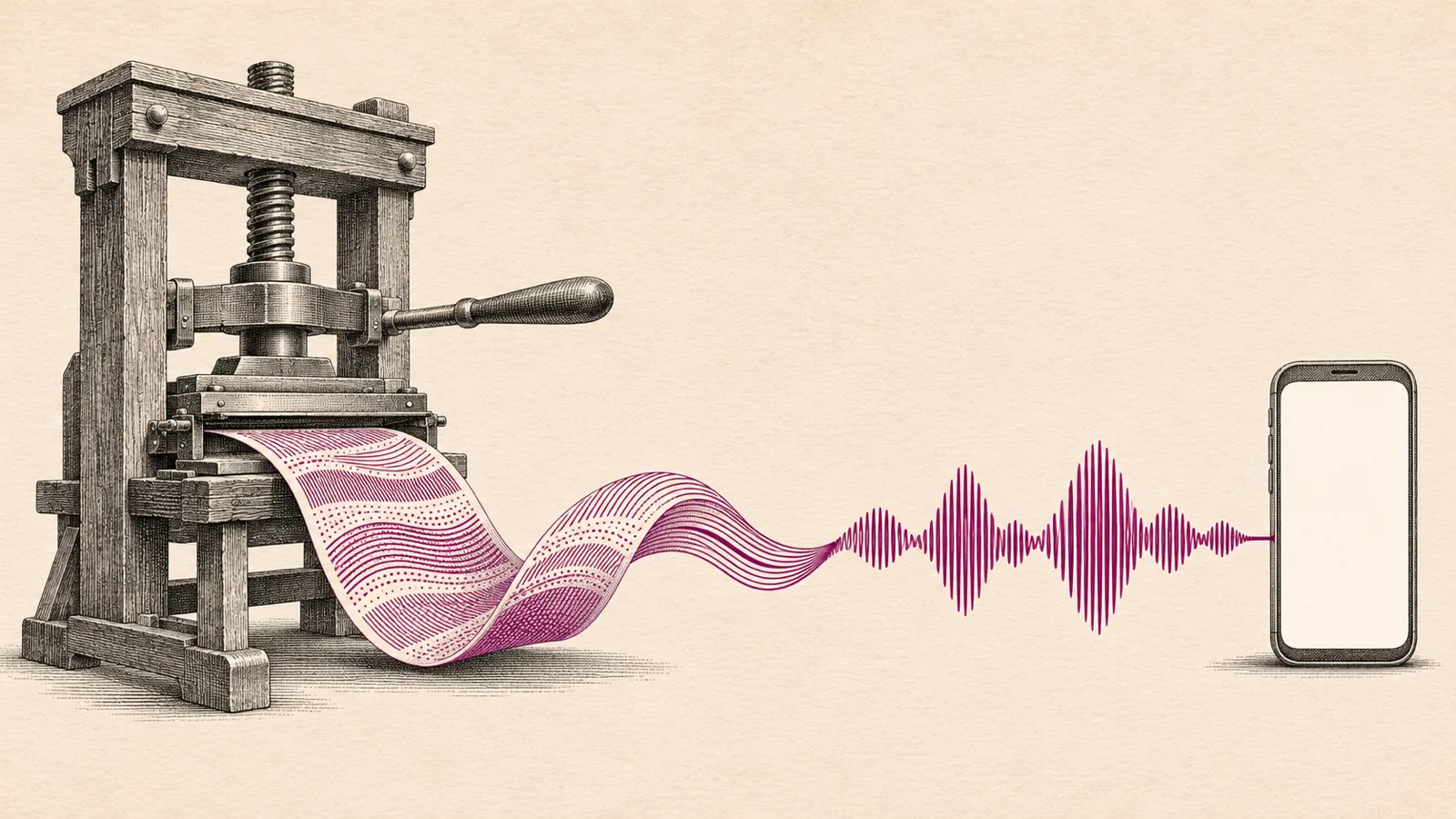
How to listen to Project Gutenberg books for free: find existing audiobooks, or play any EPUB aloud on iPhone, Android, Mac or Windows, step by step.
Where to Find Free Audiobooks Legally
Where to find free audiobooks legally: Libby and Hoopla bestsellers with a library card, 21,000+ LibriVox classics, and how to spot pirated copies.