


Reading After a Concussion: How Listening Helps
Reading after a concussion: when to start, why words swim and screens hurt, and how listening at low volume eases you back into school, work and books.
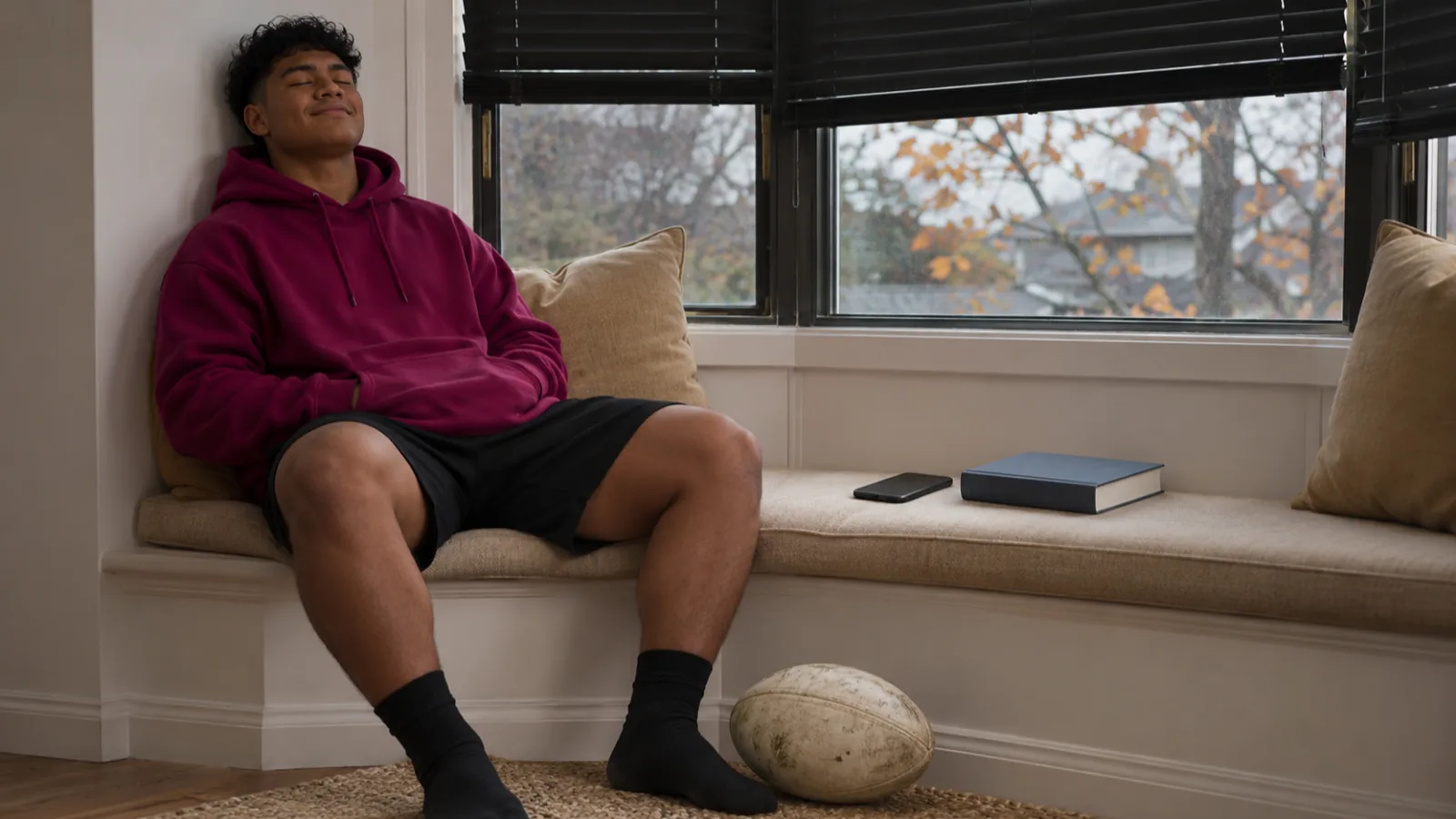
Reading after a concussion usually starts with a day or two of relative rest and limited screens, then short reading sessions that you stop when symptoms rise. Listening can help because it spares your eyes the focusing and tracking work that concussions often disrupt, but it still takes mental effort, so keep sessions short and follow your provider's advice.
In the first 24 to 48 hours, rest and keep screens to a minimum; a 2021 randomized trial linked heavy screen use in that window to longer symptoms.
After that, ease back into reading in short sessions and let your symptoms set the pace.
Vision problems are common after concussion: in one study of 100 adolescents, 69% had at least one, such as trouble focusing or converging the eyes.
Listening, at low volume in a calm room, reduces the visual work of reading. Audiobooks are a common school accommodation during recovery.
See a provider if symptoms last more than two to three weeks or get worse, and go to an emergency department for any danger sign.
Reading after a concussion usually comes back in stages: a day or two of relative rest with screens kept to a minimum, then short reading sessions that you stop when symptoms rise. Listening helps many people in that second stage because it removes the eye work of reading, the part concussions often disrupt. It's still mental effort, so keep it short, and follow your healthcare provider's advice.
This guide is general information, not medical advice. Your provider knows your injury and should guide your return to school, work and screens.
Get emergency care right away if, after a head injury, you or someone you're caring for has a headache that gets worse and won't go away, repeated vomiting, slurred speech, weakness or numbness, a seizure, one pupil larger than the other, growing confusion, or is very drowsy or can't be woken. These are CDC danger signs.
Why is reading so hard after a concussion?
Reading uses several systems that a concussion can affect at once.
| What's affected | What you notice when reading |
|---|---|
| Eye focusing (accommodation) | Text blurs, especially after a few minutes |
| Eye teaming (convergence) | Words double, swim or feel "off"; eyes ache |
| Eye jumps between words (saccades) | You lose your place or skip lines |
| Light sensitivity | Screens and white pages feel harsh |
| Headache and dizziness | Symptoms climb the longer you read |
| Concentration and memory | You reread the same paragraph and lose the thread |
| Fatigue | You run out of energy fast |
Vision problems are especially common. In a study of 100 adolescents seen at Children's Hospital of Philadelphia's concussion program, 69% had at least one vision diagnosis: 51% had focusing problems, 49% convergence insufficiency and 29% problems with the quick eye movements reading depends on. Routine vision screening can miss these.
When can you start reading after a concussion?
Most guidance now favors a short period of relative rest followed by a gradual return, not weeks in a dark room.
| Stage | What to do |
|---|---|
| First 24–48 hours | Relative rest. Keep screens to a minimum. Gentle activity such as short walks is fine if it doesn't worsen symptoms. |
| After the first day or two | Ease back into reading in short sessions. Take breaks before symptoms build. Increase time gradually. |
| Returning to school or work | Often within a day or two, with supports such as rest breaks, shorter assignments and extra time. |
| After 2–3 weeks | If symptoms haven't improved or get worse when you're active, talk to your provider about a specialist referral. |
The evidence behind the screen advice: in a 2021 randomized trial in JAMA Pediatrics, 125 people aged 12 to 25 seen in an emergency department were either allowed screens or asked to avoid them for 48 hours. The screen group took a median of 8 days to recover, compared with 3.5 days. The authors called the results preliminary. The 2022 Amsterdam consensus on concussion in sport also recommends reduced screen time in the first 48 hours, followed by a stepwise return to learning.
The CDC puts it simply: rest is good in the first few days, then ease back into regular activities even with mild symptoms, and cut back on anything that makes symptoms worse.
How listening helps when reading is hard
Listening takes most of the visual work out of reading. You don't have to focus on small print, keep two eyes aligned on a line, or jump from word to word. You can lower the lights, look at something restful, or close your eyes.
That's why clinicians suggest it. Among the classroom supports CHOP's concussion team recommends while vision problems recover are frequent visual breaks, oral teaching and audiobooks.
Listening isn't free of effort, though:
- Your brain still has to follow and remember. Concentration and memory problems don't go away just because the words come through your ears.
- Sound can be a trigger. Some people are sensitive to noise after a concussion. If listening makes your headache worse, stop.
- It's not a treatment. Listening is a way to keep up with reading while you recover. Recovery itself comes from time, sleep, gradual activity and your provider's care.
Use whichever format causes fewer symptoms on a given day: listening, large print on paper, or a dimmed screen with big text.
How to listen to reading during concussion recovery
Once your provider says it's okay to ease back in, try this:
- Start small. Begin with a few minutes and stop before symptoms build. Add time over days, not hours.
- Keep the volume low and listen in a quiet room. Over-ear headphones at low volume block background noise without needing to be loud.
- Slow the voice down. A speed a little below normal is easier to follow when concentration is low.
- Dim or turn off the screen. Use an app that keeps reading with the screen locked, so you're not looking at a bright display.
- Pick easy material first. A familiar novel or light article before a textbook chapter.
- Take notes later, not during. Pause at the end of a section and jot one line, or ask someone to help.
- Track your symptoms. If headache, dizziness or fogginess rises during listening, take a break and shorten the next session.
For textbooks and long readings, see how to listen to a textbook.
Returning to school or work after a concussion
Ask for supports early. Most are simple, and they can be dialed back as you improve.
The CDC's return-to-school guidance lists supports based on a student's symptoms, including:
- Shorter assignments focused on what's essential, and extra time for classwork and tests
- Class notes provided, or permission to record lessons on a phone
- Scheduled rest breaks and visits to the school nurse
- Sunglasses in class and a seat away from bright windows for light sensitivity
- A quiet place to study or take tests for noise sensitivity
Add a request for audio versions or text-to-speech for readings, especially if eye focusing or tracking is affected. The CDC suggests the student's healthcare provider fill in its HEADS UP Letter to Schools so the school knows what to put in place. If symptoms last, a 504 plan can formalize these supports in US schools.
At work, ask your manager or HR for a temporary lighter reading load, more time for long documents, breaks, and permission to listen to reports instead of reading them on screen.
Make your phone easier on a recovering brain
Before you listen, set up your devices for fewer triggers:
- Turn the brightness down and use dark mode.
- Turn off notifications so you're not pulled back to the screen.
- Enlarge text when you do need to read: on iPhone, Settings > Accessibility > Display & Text Size > Larger Text; on Android, search Settings for Font size.
- Use built-in read-aloud for short text: Speak Screen on iPhone and iPad (Settings > Accessibility > Read & Speak, then swipe down with two fingers) or Select to Speak on Android.
If light sensitivity and headaches dominate, our guide to text to speech for migraines has more low-light tips, and the one on brain fog and chronic fatigue covers pacing.
Listening to schoolwork and documents with Speechly
For readings longer than a screen, a reader app that keeps your place and works with the screen off is easier than built-in tools.
Speechly is a text-to-speech reader for iPhone and iPad, Android, Mac and Windows. It reads PDFs, Word documents, EPUB books, web pages and photos of printed handouts aloud with 25+ natural AI voices.
- Download Speechly free. The free plan includes two files with premium voices; no card required.
- Add a reading: open a PDF or document, paste a link, or take a photo of a printed worksheet or page.
- Pick a calm voice you like; you can preview each one.
- Set the speed as low as 0.5× and press play.
- Lock your phone. Speechly keeps reading with the screen off and saves your place, so a five-minute session can pick up exactly where it stopped.
It also estimates how long each document will take to listen to, which helps you plan short sessions. On a Mac, select text and press ⌘E; on Windows, Alt+R. Premium is $14.99/month or $139/year for unlimited listening.
The bottom line
After a concussion, rest for the first day or two and keep screens to a minimum, then ease back into reading in short sessions guided by your symptoms. Listening at low volume, with the screen off, takes the strain off eyes that may not be focusing or tracking well. If reading is still hard after two to three weeks, see your provider, and ask about a vision assessment.
Frequently asked questions
Can I read after a concussion?
Yes, after a day or two of relative rest, in short sessions. Stop or take a break when headache, dizziness or blurred vision gets worse, and build up gradually. Ask your provider for guidance that fits your injury.
Why can't I read after a concussion?
Reading needs precise eye movements, focusing and concentration, and a concussion can affect all three. Many people find words blur, lines jump or they reread the same sentence. These problems often improve, and a vision assessment can help if they don't.
Are audiobooks okay after a concussion?
For many people, yes, once the first day or two of rest has passed. Keep the volume low and sessions short, and stop if sound makes your headache worse. Clinicians often suggest audiobooks as a school support during recovery.
Is screen time bad after a concussion?
Limiting screens in the first 48 hours is recommended. In a randomized trial of 125 young people, those who used screens freely in that window took longer to recover. After that, return to screens gradually as symptoms allow.
How long does it take to read normally after a concussion?
Most people feel better within a couple of weeks. If reading is still hard after two to three weeks, or symptoms worsen, see your provider; a referral to a concussion specialist or a vision assessment may help.
Should I use an e-reader or paper after a concussion?
Use whatever causes fewer symptoms. Paper avoids screen glare; an e-reader lets you enlarge the text and lower the brightness. Listening removes the visual work altogether, which some people find easiest early on.
Listen with Speechly
Natural AI voices on iPhone, iPad, Android, Mac and Windows, with word highlighting and your place saved on every device. Free to download.
Prices and features of other products were checked on November 18, 2026 and can change. Speechly is not affiliated with the other companies named here.
Text to Speech for Migraines: Reading When Light Hurts
Text to speech for migraines: when listening helps, when to rest instead, a low-light, low-volume setup, and free read-aloud tools on every device.

Text to Speech for Eye Strain and Screen Fatigue
How text to speech for eye strain and screen fatigue works: what to listen to instead of read, free tools on every device, and the eye habits that help.

Text to Speech for Brain Fog and Chronic Fatigue
Text to speech for brain fog and chronic fatigue: read lying down with eyes closed, pace reading like any activity, and a setup for low-energy days.