


How to Read More When You Have No Time
How to read more when you have no time: 8 steps to find 20 hidden minutes a day, read in 5-minute gaps and listen on the go. About 22 books a year.
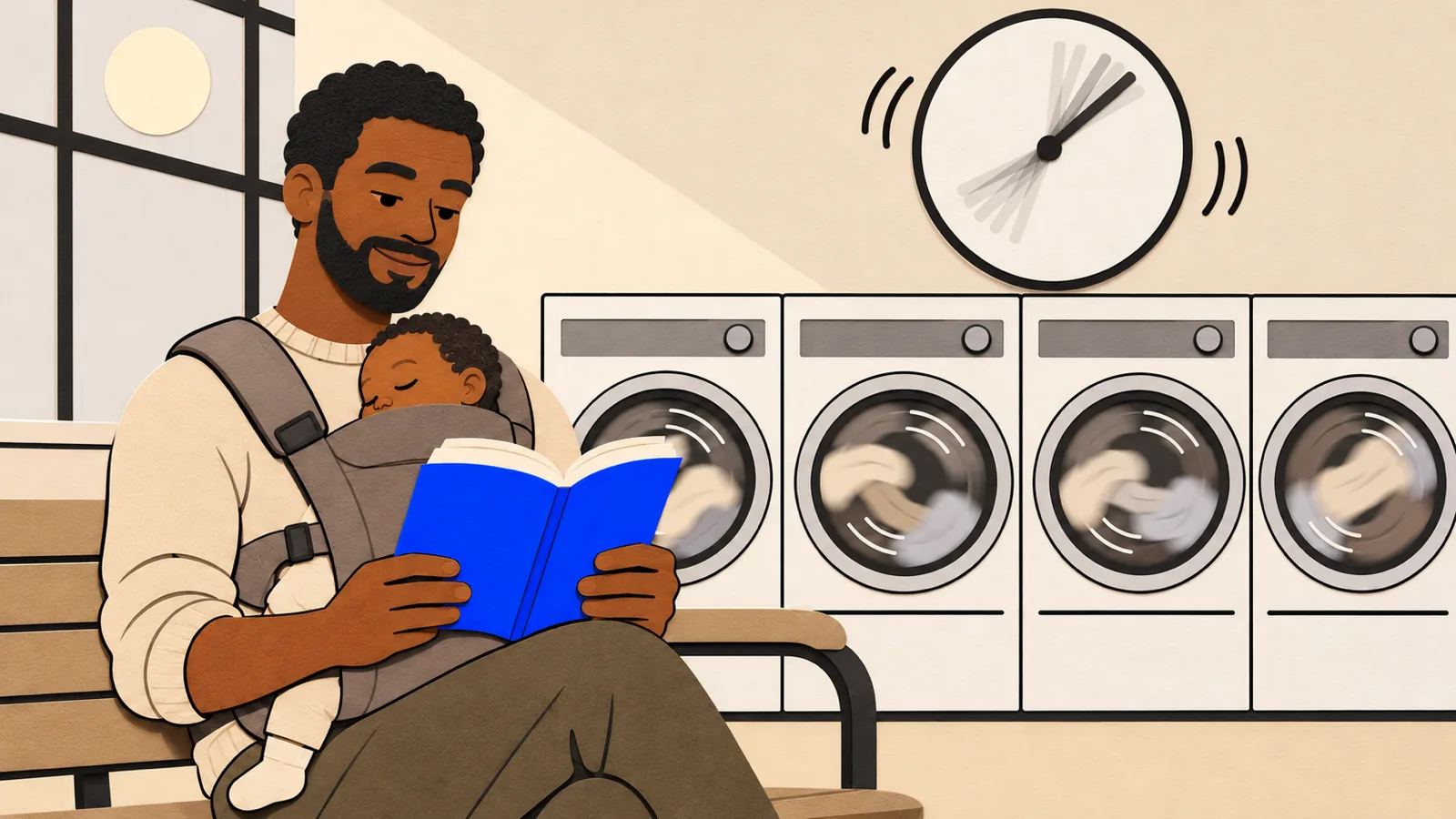
To read more when you have no time, stop waiting for a free hour and use the gaps you already have: keep a book on your phone for 5-minute waits, listen during commutes, chores and walks, and swap 15 minutes of scrolling for a chapter. Twenty minutes a day adds up to about 22 books a year.
Busy people rarely have zero time; they have scattered time. U.S. full-time workers average about 4 hours of leisure a day but only about 10 minutes of reading.
Read in 2- to 10-minute pockets with an e-book on your phone, so every wait in line becomes a few pages.
Listen when your hands are busy. The average U.S. commute is 26.4 minutes each way, nearly an hour a day of listening time.
Listening at 1.5× turns a 10-hour audiobook into under 7 hours, and in one study, lectures watched at 2× cost students very little comprehension.
Skip speed-reading courses. Research finds a trade-off between speed and understanding; quitting books you don't enjoy saves far more time.
Here's how to read more when you have no time: stop waiting for a free hour and fill the small gaps you already have. Keep a book on your phone for every 5-minute wait, listen while you commute, cook and walk, and trade 15 minutes of scrolling or TV for a chapter. That's 20 to 30 minutes a day, or about 22 to 33 books a year.
The time is usually there, just scattered. In the 2025 American Time Use Survey, full-time workers averaged about 4 hours of leisure a day, including almost 2 hours of TV, but only about 10 minutes of reading. Parents whose youngest child is under 6 averaged about 3.5 hours of leisure and 12 minutes of reading. The averages include weekends, but the pattern is clear: reading loses to screens, not to a lack of minutes.
How to read more when you have no time: 8 steps
- Find your hidden time. Check where your minutes go before deciding you have none (steps below).
- Set a floor, not a goal. Commit to 10 minutes a day and tie it to something you already do, like your morning coffee or the train ride home. It's small enough for your worst day and adds up to about 11 books a year.
- Put your book on your phone. Keep your current e-book open on it, so every line, waiting room and kettle boil becomes a few pages.
- Listen when your hands are busy. Commutes, cooking, laundry, walks and workouts are hours a week that print can't reach but audio can.
- Speed up the audio. Start at 1.25× and move to 1.5× once it feels normal. A 10-hour audiobook takes under 7 hours at 1.5× and 5 hours at 2×.
- Swap, don't add. Replace one thing: the first 15 minutes of TV, the last scroll before bed or the social media you open at lunch.
- Choose short, gripping books. Novellas, thrillers, essay collections and nonfiction with short chapters fit short pockets. Give each book 50 pages and quit if you're not hooked.
- Keep two books going. One to read when you can sit down, one to hear when you can't, so you never lose a pocket because the wrong format is with you.
To make it automatic, follow the 10-minute plan in how to build a daily reading habit.
How to see where your time goes on iPhone and Android
Your phone already tracks this. Look once and pick the app you'd most happily trade for a book.
- iPhone: open Settings, tap Screen Time, then tap Daily Average. Tap Week or Day to switch views (Apple's guide).
- Android: open Settings and tap Digital Wellbeing to see today's use by app. To cap an app, tap App timers, tap Set timer next to the app, choose a time and tap OK (Google's guide). Menu names vary by phone maker.
When an Android timer runs out, the app closes and its icon dims until midnight: your cue to open your book.
How many books can you read in 10, 20 or 30 minutes a day?
More than you'd guess. Adults read silently at about 238 words per minute for nonfiction and 260 for fiction, according to a meta-analysis of 190 studies. For a typical 80,000-word book, at 238 words per minute:
| Daily reading | Words per year | Books per year |
|---|---|---|
| 10 minutes | about 870,000 | about 11 |
| 20 minutes | about 1.7 million | about 22 |
| 30 minutes | about 2.6 million | about 33 |
Listening comes on top, and at 1.5× every 30 minutes covers 45 minutes of audio. On a busy day, those 20 minutes come as a 5-minute wait, a 10-minute walk and half a commute.
How to find time to read in a busy day
Match the format to the moment. Eyes-free moments hold the most extra time.
| Pocket of time | Best format | Why |
|---|---|---|
| Lines, appointments, the kettle | E-book on your phone | Your phone is always with you |
| Driving commute | Audio only | Eyes stay on the road |
| Train or bus commute | E-book, print or audio | Read if you sit, listen if you stand |
| Cooking, dishes, laundry | Audio | Hands busy, attention free |
| Walks, runs, the gym | Audio | Exercise time becomes reading time |
| Lunch break | Print or e-book | A real break from work screens |
| Before bed | Print book | Easier on sleep than a screen |
The commute alone is a big pocket. The Census Bureau's 2022 average one-way trip for people who traveled to work was 26.4 minutes, almost an hour a day of listening. If you drive, start your book before you pull out; see how to listen to text while driving safely. For more ideas, read how to turn your commute into reading time.
Keep bedtime for paper if you can. In a 2015 sleep-lab study, people who read on a light-emitting e-reader before bed took longer to fall asleep than when they read a printed book.
How to read more by listening
Listening is the biggest lever, because it turns hours you can't use for print into reading time.
Free: borrow audiobooks with Libby
The Libby app lets you borrow e-books and audiobooks free from your local library. Install it on iPhone, iPad or Android (or use it in a browser at libbyapp.com), find your library, sign in with your library card and borrow a title. Popular titles often have waitlists, so place several holds at once.
Listen to e-books, PDFs and articles with Speechly
Speechly is a text-to-speech app that reads e-books, PDFs, Word documents, web pages and photos of printed pages aloud with natural AI voices, on iPhone, iPad, Android, Mac and Windows. Use it for anything without an audiobook: EPUBs, long articles, work reports and the paper book on your nightstand.
- Download Speechly on your phone. You can start without an account.
- Add something to hear: open an EPUB, PDF or Word file, paste a link to an article, or photograph a page of a printed book. You can also pick from a built-in catalog of 75,000+ free public-domain books.
- Choose one of 25+ voices and set the speed anywhere from 0.5× to 2×.
- Press play and lock your phone. Speechly keeps reading with the screen off.
- Stop when you arrive. Your place is saved, and you can pick up on any device signed in to the same account.
It shows how long each document will take to listen to, so you can pick one that fits your commute, and highlights each word as it reads. At your desk, select text in any app and press ⌘E on a Mac or Alt+R on Windows to hear it in a small floating player. It doesn't read DRM-protected Kindle or Audible books, so use those apps for books you bought there.
Do audiobooks count as reading?
Yes, and for most books you'll understand about as much. A meta-analysis of 46 studies with 4,687 participants found no reliable overall difference between reading and listening comprehension. Reading had a small edge when people read at their own pace and on questions that required inference, so keep dense or technical books for the page.
Speed costs less than you'd think. In a UCLA study of lecture videos, students who watched at 1.5× or 2× lost very little comprehension, both right away and a week later; scores fell at faster speeds. For the technique, see speed listening at 2×.
Does speed reading help you read more?
No. A 2016 review of reading research found a trade-off between speed and accuracy: readers are unlikely to double or triple their speed and still understand as much. Skimming gets you the gist with moderate comprehension. The reliable way to read faster is to read more, which builds vocabulary and language skill.
Troubleshooting: why you still aren't reading more
- You open social media instead of your book. Put your e-book app where your most-used social app sits on your home screen, and move the social app into a folder.
- You're too tired at night. Move reading earlier, to the commute, lunch or your first 10 minutes home, and use audio when your eyes are done.
- You can't focus while listening. Pair audio with low-thought tasks like walking or folding laundry, not email or meetings, and slow down to 1× or 1.25×.
- You lose track in short sessions. Choose books with short chapters, and reread the last paragraph before you start.
- You're stuck in a book you don't like. Quit it. A dull book costs you weeks; starting a better one costs nothing.
- Your reading list is all articles. Turn saved articles into a listening queue with how to get through your read-later list.
Start with 10 minutes today
Pick one pocket today, a wait, a walk or your commute, and read or listen for 10 minutes. For everything without an audiobook, Speechly reads your e-books, PDFs and articles aloud on every device. It's free to download, the free plan includes two files with premium voices, and Premium is $14.99/month or $139/year for unlimited listening.
Frequently asked questions
Is 10 minutes of reading a day worth it?
Yes. At an average adult reading speed of about 238 words per minute, 10 minutes a day is roughly 870,000 words a year, or about 11 books of 80,000 words. Many days will run longer once you start.
How do busy people find time to read?
They read in short pockets instead of waiting for long sessions, keep a book on their phone at all times, and listen while commuting, cooking or exercising. Most also quit books they don't enjoy quickly, so they never stall.
Should I learn to speed read to read more?
No. A major review of reading research found that people are unlikely to double or triple their reading speed and still understand as much. Skimming works when you only need the gist; for everything else, listening during dead time adds more reading than speeding up your eyes.
Is it better to read or listen when you're short on time?
Do both. Read when you can sit and focus, and listen when your hands and eyes are busy. On average, people understand about as much from listening as from reading, though reading has a small edge for dense material you need to think through.
What should I read when I'm busy?
Pick short, gripping books: novellas, thrillers, story and essay collections, and nonfiction with short chapters. Short units fit short pockets and let you finish books often, which keeps you going.
How many books can I read if I read 30 minutes a day?
About 33 books of 80,000 words a year at an average reading speed of 238 words per minute. Count listening time too, and the total rises quickly.
Listen with Speechly
Natural AI voices on iPhone, iPad, Android, Mac and Windows, with word highlighting and your place saved on every device. Free to download.
Prices and features of other products were checked on November 18, 2026 and can change. Speechly is not affiliated with the other companies named here.
How to Build a Daily Reading Habit That Sticks
How to build a daily reading habit that lasts: a 7-step plan starting at 10 minutes a day, how long it really takes, and how to restart after a slump.

How to Turn Your Commute into Reading Time
How to turn your commute into reading time on a train, bus, walk or drive: 5 steps, what to read by trip length, free audiobooks and no-signal fixes.
How to Read More Books: 15 Habits That Work
How to read more books: 15 habits that make reading automatic, why 20 minutes a day adds up to 22+ books a year, and how to read on your commute.